
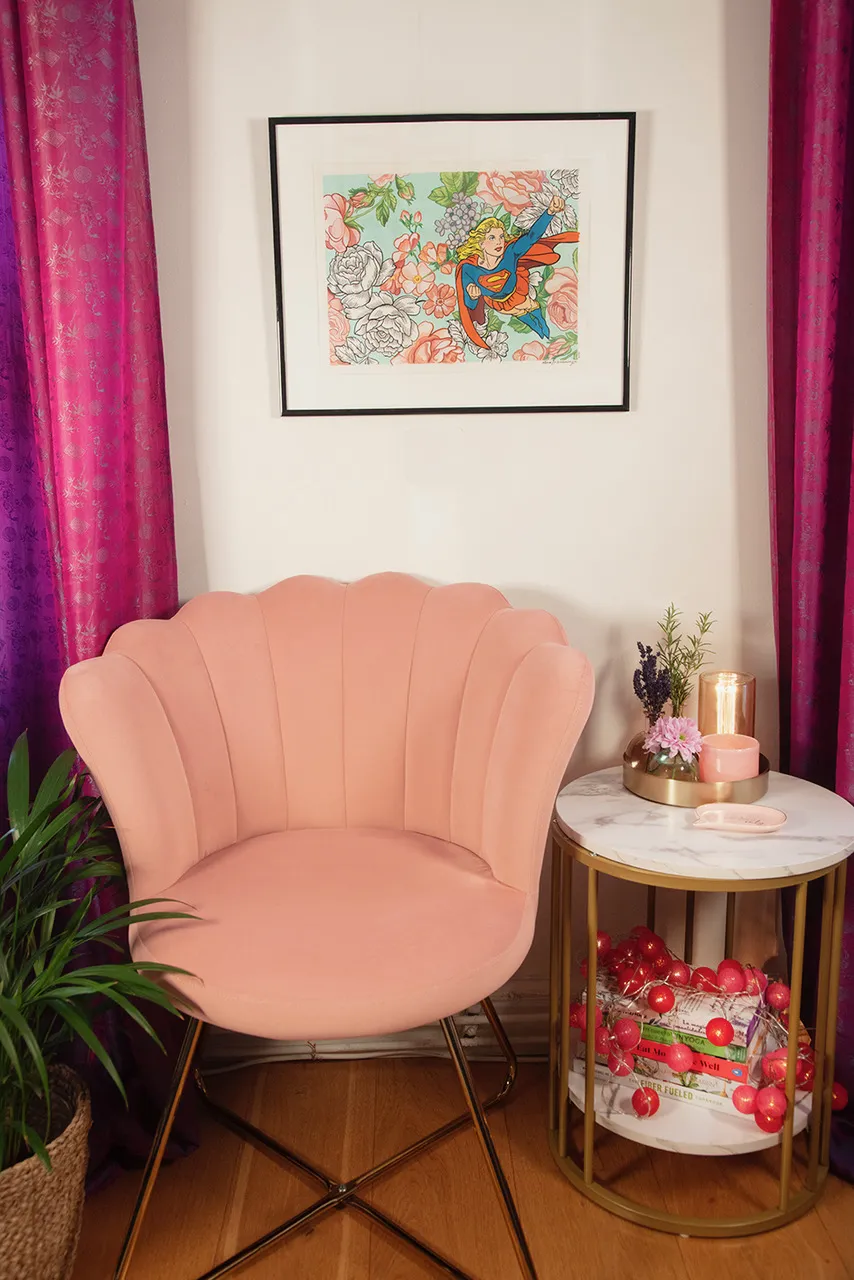
Creating a More Energy Supportive Environment
Creating a More Energy Supportive Environment
I can be at home, physically still, and not be resting.
The room may be too bright. A sound may keep pulling at my attention. Something I need may be stored in a place that requires more bending, reaching, or walking than my body can comfortably manage. Clutter may keep reminding me of unfinished tasks. A chair may look comfortable while asking my neck, back, or pelvis to work continuously.
The environment around us is not neutral. It can quietly add to the load our bodies and brains are already carrying, or it can reduce some of that load.
Creating a more energy-supportive environment does not require a perfect home, an expensive renovation, or a space designed entirely around illness. It begins by noticing what your surroundings repeatedly ask from you.
Being at home does not automatically mean the nervous system can settle
I need a great deal of quiet and time alone, particularly after periods with more social interaction, travel, pain, or sensory input. That need is one reason my time at the country house matters to me. The quieter environment gives my body fewer things to process.
This does not mean I never want stimulation. I love travel, concerts, new experiences, and being around people I care about. I am both an adventurer and a homebody. The important part is recognizing that my body cannot remain in a high-input environment indefinitely without consequences.
A supportive environment reflects that reality. It allows both experience and recovery to have a place.
Sensory input uses energy
Noise, lighting, temperature, movement, textures, and visual clutter all require processing. When the nervous system is already managing pain, fatigue, or other symptoms, sensory input that once faded into the background may become difficult to ignore.
For someone with sensory sensitivity, reducing input can be a practical form of energy conservation. That might mean softer lighting, lowering unnecessary background sound, using curtains or an eye mask, sleeping with earplugs, choosing clothing and bedding that feel tolerable, or creating one place where fewer things compete for attention.
The goal is not to remove every sensation. It is to notice which forms of input repeatedly increase tension, pain, irritation, or exhaustion, and which help the body settle.
Clutter creates more than visual mess
Clutter can create cognitive noise. Each visible object may represent a decision, a task, or something unfinished. When brain fog is already present, the environment can become a collection of reminders the brain keeps trying to hold.
At the same time, conventional organizing advice can create more work than it removes. A beautiful system is not supportive if it requires constant maintenance, hides essential items, or makes frequently used things harder to reach.
An energy-supportive system prioritizes accessibility over appearance. It may mean open storage, labels, a basket where things naturally collect, keeping medication or supports where they are used, or accepting that the most practical arrangement is not the most photogenic one.
Where things are placed changes the physical cost
A home can quietly require hundreds of small movements: bending, reaching, lifting, carrying, walking between rooms, opening heavy containers, or repeatedly standing up to retrieve something.
When those movements are painful or tiring, placement matters. Frequently used items may need to be within easier reach. Supplies may need to exist in more than one room. A stool may make a task possible while seated. A lighter container may be more useful than a visually matching one.
These decisions are not about avoiding all movement. They are about deciding where movement is useful and where it is simply consuming energy without adding value.
Supportive seating still needs flexibility
No single position is comfortable for everyone, and even a well-supported position can become painful when held too long. An energy-supportive environment makes it easier to change position, support different parts of the body, and move between sitting, reclining, standing, or lying down as needed.
It also recognizes that rest may need to happen in more than one place. If the only genuinely supportive place is far from where daily life happens, reaching it may become another barrier. Sometimes having a place to pause nearby helps us respond sooner instead of waiting until the body forces a complete stop.
Routines are part of the environment too
The environment is not only furniture and objects. It also includes the systems surrounding everyday life.
A recurring shopping list, prepared reminders, a place for essential information, simpler meals, a charging station, or deciding when messages do not need an immediate response can all reduce friction. These routines create fewer decisions at the moments when energy and cognitive capacity are already low.
The most supportive routine is not necessarily the most efficient one on paper. It is the one you can still use on a difficult day.
You do not need to fix the whole environment
Looking around an unsupportive space and identifying everything that could change can quickly become overwhelming. The attempt to make life easier turns into another project demanding energy you do not have.
Begin with one repeated point of friction. Where does your body regularly tense? What do you keep getting up to retrieve? Which sound or light makes it harder to settle? What do you repeatedly forget because it has no clear place outside your head?
A small environmental change will not solve chronic fatigue or pain. But it may remove one demand your body no longer has to meet every day.
The push-crash cycle begins before the crash
We often notice the push-crash cycle most clearly when the crash arrives. But the cycle begins earlier: when several demands are taking energy at the same time, in the urgency to finish, in the sensory and cognitive load, in the small signals we override, and in the belief that we should be able to keep going.
The environment is one part of that picture. It can increase the number of demands the body is responding to, or it can make responding to early signals a little easier.
Awareness comes before adjustment. Once we begin seeing what our surroundings are asking from us, we can make more intentional choices about what needs to remain, what can be changed, and where support may create more room to breathe.
Explore the pattern in the free workshop
How to Stop the Push-Crash Cycle takes place on Nov 5, 2026. In this free workshop, we will explore why the cycle keeps repeating, what may happen before the crash, and how you can begin recognizing your own patterns earlier. It is not about perfect pacing or promising that you will never crash again. It is about understanding more of what is happening so you have something clearer to work with. WORKSHOP REGISTRATION