Adaptation Is Not Giving Up: Living Differently With Chronic Illness
Adaptation Is Not Giving Up
One of the hardest things about living with chronic illness is not the symptoms themselves.
It's what they change.
The plans you had.
The expectations you carried.
The version of yourself you thought you would be.
For a long time, I resisted adapting.
Not consciously.
I just kept trying to get back to where I had been before.
Back to the energy I used to have.
Back to the pace I used to keep.
Back to the person who could do everything without thinking twice about it.
At the same time, I also refused to let my body dictate my life.
Getting my Crohn's diagnosis ignited a fire in my belly, and this time it wasn't inflammation.
I refused to let my body decide what I could and couldn't do.
It also made me realize just how fragile life is.
You never know how long you have.
You never know how much time you have to do all those things you keep postponing for "someday."
Only when I have done X, Y and Z.
Only when work calms down.
Only when life becomes easier.
Then I'll relax.
Then I'll enjoy myself.
Then I'll start living.
So I made a bucket list.
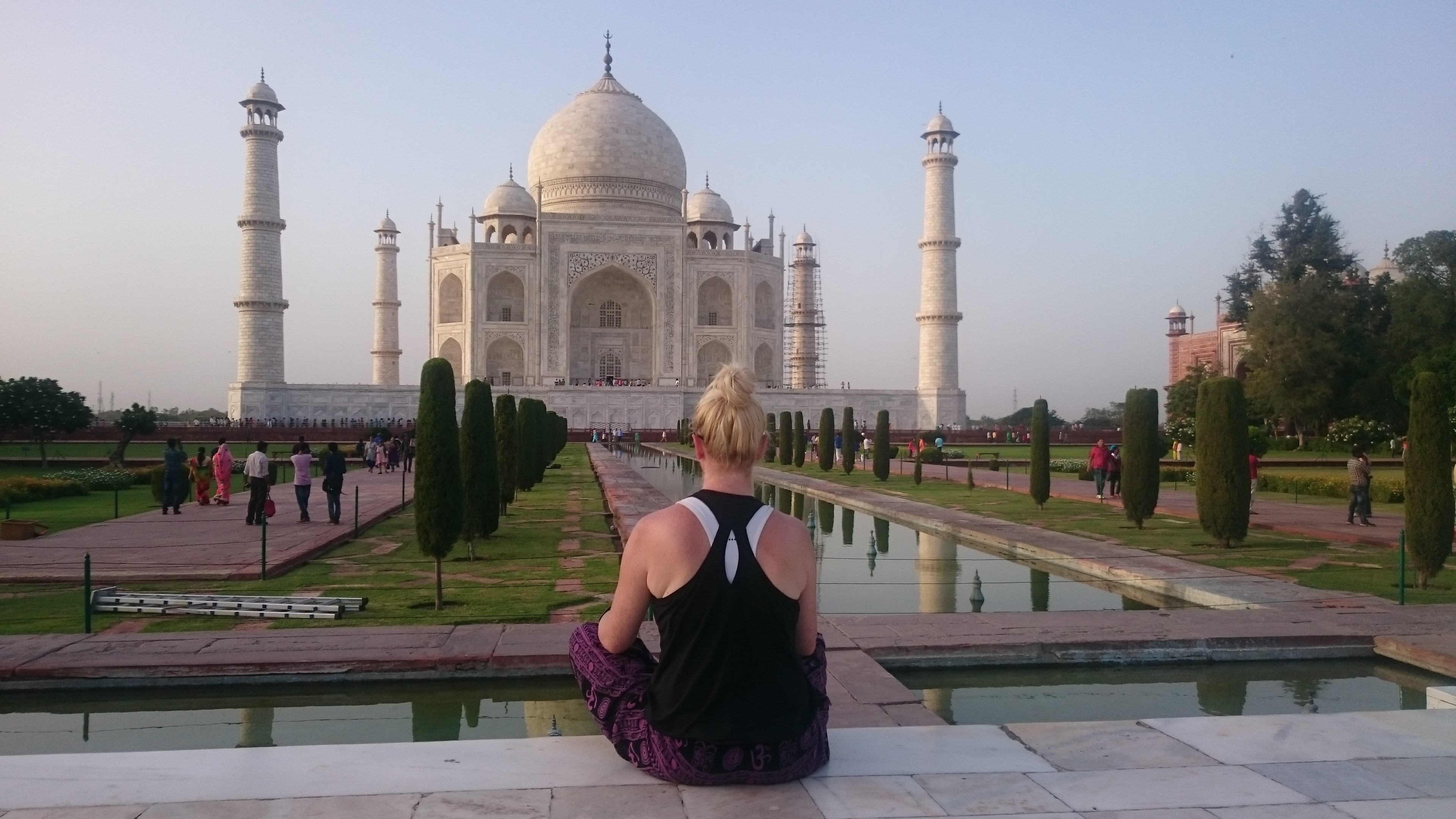
I was determined to see the world.
I was determined to visit all the continents before I turned 40.
And I did.
My list was full of adventures, experiences, and things I wanted to accomplish.
I spent almost every school holiday travelling somewhere new.
New countries.
New continents.
New experiences.
All while working full-time and constantly feeling exhausted.
I never really stopped.
The only downtime I had was often sitting on an airplane on my way to somewhere exciting.
At the time, I thought I was making the most of life.
Looking back, I can also see how much energy it cost.
I believed that if I just found the right solution, worked hard enough, rested enough, exercised enough, ate the right foods, or managed my stress better, I would eventually return to normal.
But chronic illness has a way of forcing us to confront a difficult reality.
Sometimes life changes.
And sometimes the hardest part is accepting that the old way of doing things is no longer sustainable.
And eventually it became impossible to ignore that my way wasn't working.
The Grief We Don't Always Talk About
When people think about grief, they often think about losing another person.
But chronic illness can bring many different kinds of grief.
The grief of lost energy.
The grief of lost opportunities.
The grief of changed plans.
The grief of relationships that no longer work the way they once did.
The grief of a life you thought you would have but no longer have access to.
And perhaps most painfully, the grief of no longer recognizing yourself.
There were times when I looked at my life and thought:
How did I end up here?
Why can't I do the things I used to do?
Why does everything feel harder now?
Those questions are incredibly common.
And they're often rooted in grief.
Because adaptation requires acknowledging that something has changed.
Adaptation Can Feel Like Defeat
One of the reasons adaptation is so difficult is that many of us have been taught that changing our expectations means lowering them.
That adapting means settling.
That slowing down means giving up.
That asking for help means weakness.
That doing things differently means failure.
I believed some of those things myself for a very long time.
Especially when it came to travel.
Travel has always been one of the biggest passions in my life.
For years, I travelled constantly.
As a teacher, every school holiday became an opportunity to explore somewhere new.
I visited eight countries in Asia in eight weeks.
I travelled between continents.
I ticked countries off lists.
I chased experiences.
And I loved it.
But eventually my body stopped cooperating with that version of travel.
Not because I loved travel less.
But because the way I was travelling was no longer sustainable.
Different Doesn't Mean Less
One of the biggest lessons chronic illness has taught me is that different and less are not the same thing.
Today, I still travel.
In many ways, I enjoy it more than I used to.
But I travel differently.
I stay longer in each place.
I schedule recovery days.
I make plans, but I also leave more room for flexibility.
I don't fill every day with activities.
I pay attention to how much energy I have available.
If my body tells me I can't do what I had planned, I reschedule or cancel.
Not because I'm failing.
But because I'm listening.
There was a time when cancelling plans felt like defeat.
Like it prevented me from getting the full experience and checking all of those things off my list.
How messed up is that?
Quantity above quality… What?!
Now I understand it as adjustment.
That shift took years.
Sometimes Our Priorities Change Too
Something else I didn't expect was how much my priorities would change.
For years, I worked incredibly hard on my career.
The plan was clear.
I wanted to become a high school vice principal and eventually a principal.
And honestly, I think I would have been very good at it.
I was passionate about education.
I loved supporting students and staff.
I enjoyed leadership and development.
And I wasn't far away from achieving that goal.
But somewhere along the way, something shifted.
Not overnight.
Gradually.
As my health changed, I started asking myself questions I had never really stopped to consider before.
Who was I working so hard for?
Why was this goal so important?
What was I hoping it would give me?
For so many years, I had treated work as the thing I was building my life around.
But chronic illness has a way of forcing you to look at your life differently.
Because when your energy becomes limited, you become much more aware of where that energy goes.
And eventually I realized that while meaningful work is important to me, it isn't the thing that matters most.
What matters most to me is living.
Making the most of the time I have.
Seeing the world.
Spending time with people I love.
Creating meaningful experiences.
Being present for my own life.
That realization changed a lot.
Not because my ambitions disappeared.
But because they changed.
The goals that once felt incredibly important no longer felt as urgent.
And new goals appeared.
Goals that fit the reality of my life now.
In many ways, starting Wellness by Emmely became part of that shift.
I still wanted meaningful work.
I still wanted to contribute.
I still wanted to help people.
But I wanted to do it in a way that worked with my life instead of constantly competing against it.
Looking back, I don't think I gave up one dream.
I think I found a different one.
Something else I've realized over the years is that I don't see these changes as failures.
I don't regret the years I spent teaching.
I don't regret wanting to become a principal.
I don't regret travelling the way I did.
I don't regret any of it.
Every experience I've had has shaped who I am today.
Everything I've done, every challenge I've faced, every path I've taken has brought me here.
And while this isn't the life I imagined when I was younger, I genuinely like the person those experiences helped me become.
For me, there's very little room for regret if you're following your heart.
Sometimes life takes us somewhere different than we planned.
That doesn't mean the earlier path was wrong.
Sometimes it was simply the path that led us to where we were meant to be next.
Working With Reality Instead Of Fighting It
The biggest change wasn't learning how to do more.
It was learning how to stop fighting reality.
For years I treated my body like an obstacle.
Something standing between me and the life I wanted.
Something that needed to be pushed harder.
Ignored more often.
Overridden whenever possible.
But eventually I realized that constantly fighting my body was exhausting.
Not just physically.
Emotionally too.
Because every day felt like a battle.
Adaptation changed that.
Not overnight.
But gradually.
The more I worked with my body instead of against it, the more sustainable life became.
Redefining Strength
I used to think strength meant pushing through.
Keeping going.
Getting things done no matter what.
And to be fair, I still have a bit of a gold medal in that department.
But chronic illness taught me a different version of strength.
Strength can look like resting before you're completely exhausted.
Strength can look like cancelling plans when you need to.
Strength can look like asking for help.
Strength can look like changing expectations.
Strength can look like doing things differently.
Not because you've given up.
But because you're trying to build something sustainable.
What Becomes Possible When We Adapt
Adaptation doesn't remove chronic illness.
It doesn't magically restore energy.
It doesn't guarantee that symptoms disappear.
But it can create something incredibly valuable.
It creates space.
Space for recovery.
Space for meaningful experiences.
Space for flexibility.
Space for joy.
Space for a life that works more gently with the reality of your body.
I still miss some of the things I used to be able to do.
I still grieve certain losses.
And it's not like you lose things once and then you're done grieving.
Chronic illness often brings new losses over time.
New limitations.
New adjustments.
Sometimes even relationships that can no longer continue in the same way.
I still have days when I wish things were different.
But adaptation didn't make my life smaller.
It made my life more intentional.
And that has made all the difference.
Because adaptation is not giving up.
It's learning how to move forward with the body you have.
And sometimes that understanding is the first real shift.